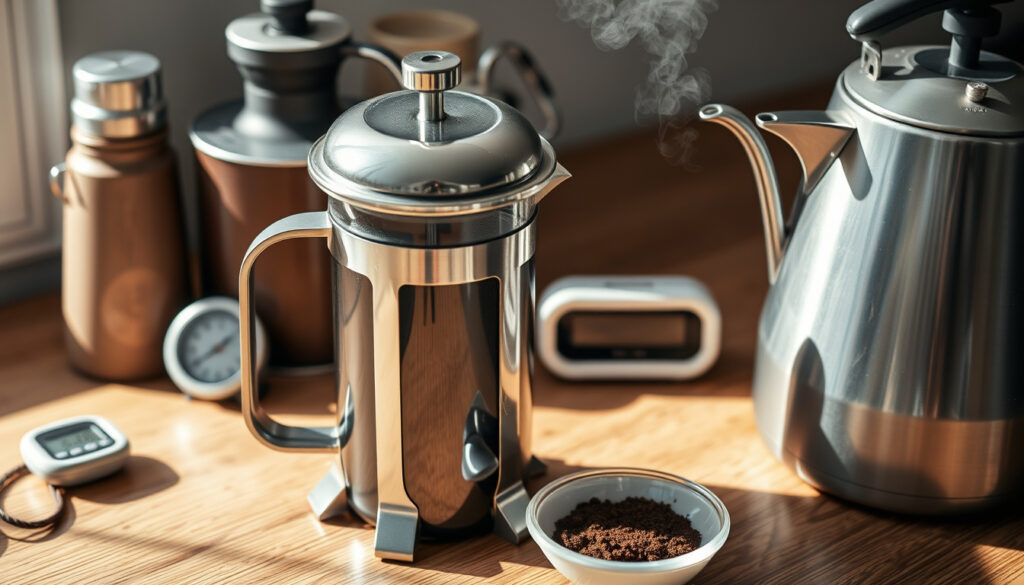
How to Brew French Press Correctly: Grind, Temp & Steep Guide
Getting a perfect French press cup—without bitterness or weakness—requires precisely controlling grind size, water temperature, steep time, and decanting. This guide walks through the evidence-based parameters that turn a good cup into a great one.
Recommended steep time: 4–5 minutes · Water temp: 195–205°F (90–96°C) · Coffee-to-water ratio: 1:15
Quick snapshot
- Coarse grind reduces fine particles (ESPRO)
- Steep time 4–5 minutes for balanced extraction (Planetary Design) (ESPRO)
- Water temp range 195–205°F per SCA protocol (Specialty Coffee Association)
- Exact optimal steep time for specific roast levels is not firmly established
- Whether stirring technique significantly changes extraction uniformity
- Ideal decanting speed to minimize sediment
- Growing interest in precise immersion brewing creates demand for standardized home protocols
- Expect more specialty-branded French press kits with integrated temperature guides
Six key parameters, one pattern: each variable shifts the final flavor, so consistency matters more than chasing a “perfect” number.
| Parameter | Recommended value | Source |
|---|---|---|
| Grind size | Coarse (like sea salt) | ESPRO |
| Water temperature | 195–205°F (90–96°C) | Specialty Coffee Association |
| Coffee-to-water ratio | 1:15 (e.g., 30g coffee / 450ml water) | Planetary Design |
| Steep time | 4–5 minutes (or 3–4 for milder, 6–7 for bolder) | ESPRO, Planetary Design |
| Pressing speed | Slow, about 20 seconds to plunge fully | ESPRO |
| Decanting | Pour into carafe immediately after pressing | Common consensus (original research from NCA) |
The Science Behind French Press Brewing
The French press is a full-immersion method (National Coffee Association USA). Grounds sit in hot water the whole time, so controlling extraction is key. The Specialty Coffee Association treats grind particle size, water temperature, and brew time as three core variables (SCA).
- Over-extraction = bitterness (too fine, too hot, or too long).
- Under-extraction = weak, sour notes (too coarse, too cold, or too short).
French press gives you full-bodied coffee but demands more precision than drip. The coarse grind and metal filter let oils through, so bitterness from over-extraction is especially punishing.
The implication: controlling these three variables gives you the power to dial in flavor methodically, rather than guessing.
How to Choose the Right Grind Size
A coarse grind is widely recommended to minimize fine particles that slip through the mesh (ESPRO). Planetary Design suggests a medium-coarse grind (Planetary Design). Both agree: too fine and you get bitter sludge.
“A coarse grind is commonly recommended for French press to reduce fine particles passing through the filter.”
— National Coffee Association USA
A handy test: the grounds should feel like breadcrumbs. If they feel like sand, they’re too fine.
The pattern is clear: a slightly coarser grind is a safer default for French press than a slightly finer one.
Water Temperature and Ratio
The SCA specifies a water temperature range of 195–205°F (90–96°C) (Specialty Coffee Association). Starbucks at Home recommends using water that is 30 seconds off the boil (Starbucks At Home).
- Boiling water (212°F) scorches the grounds, causing harsh flavors.
- Water cooler than 195°F under-extracts, leaving coffee flat.
The coffee-to-water ratio of 1:15 is a safe starting point (Planetary Design). For a standard 8-cup press (about 1 liter), use 65–70 grams of coffee.
“Allow coffee to steep for up to 4 minutes before pressing. Press slowly, counting to 20 seconds, until the plunger reaches the bottom.”
— Starbucks At Home
The implication: temperature and ratio are interdependent. A hotter brew may need slightly less steep time; a cooler brew can go a bit longer. But stay inside the 195–205°F window for reproducible results.
Steep Time and Pressing Technique
Common guides converge on 4 to 5 minutes for a balanced cup (ESPRO, Planetary Design). You can adjust: 3–4 minutes for a milder brew, 6–7 minutes for a bolder one (Planetary Design). A CoffeeCompass tool also suggests roughly 4 minutes of contact time (Coffee Circle CoffeeCompass).
- After steeping, press slowly over about 20 seconds (ESPRO).
- Decant immediately: if coffee sits on the grounds, extraction continues and bitterness increases.
- Stirring after adding water ensures all grounds are saturated (ESPRO).
The narrow window between 4 and 5 minutes is where most home brewers land. Pushing past 5 minutes without adjusting grind or temperature risks the same bitterness you were trying to avoid.
The catch: if you stray too far from 4–5 minutes without adjusting other variables, you’ll likely hit bitterness or weakness.
Common French Press Mistakes and Fixes
Two common problems: bitterness (over-extraction) and weakness (under-extraction). Bitterness often comes from too-fine grind or too-long steep (Planetary Design). Weak coffee results from too little coffee or too short a steep (ESPRO).
- Too bitter: Use coarser grind, reduce steep time by 1 minute, or lower water temp.
- Too weak: Increase coffee dosage, extend steep time by 1 minute, or use water closer to 205°F.
- Sediment in cup: Use a coarser grind and pour gently.
The National Coffee Association notes that grind size strongly affects brewed coffee quality (National Coffee Association USA). A small change in grind can flip the result.
Confirmed facts
- Coarse grind is standard for French press (ESPRO)
- Water should be 195–205°F (SCA)
- Steep for 4–5 minutes for balanced cup (Planetary Design)
- French press is a full-immersion method (NCA)
What remains unclear
- Exact optimal steep time for specific roast levels is not firmly established
- How much agitation (stirring) affects extraction uniformity
- Whether decanting into a preheated carafe matters significantly
- Ideal pressing speed beyond the general “slow” guidance
- Whether pressing speed and decanting timing are as critical as manufacturers claim
Step‑by‑Step French Press Brewing
- Boil water and let it rest 30 seconds (Starbucks At Home).
- Add coarse‑ground coffee to the press (use 1:15 ratio as a starting point).
- Pour hot water over grounds, ensuring all are wet. Stir gently.
- Place the lid on the press (plunger raised) and let steep for 4 minutes.
- Press the plunger down slowly — about 20 seconds (ESPRO).
- Decant immediately into a carafe or mug. Do not let it sit on the grounds.
“A common recommended steep time for French press coffee is about 4 to 5 minutes.”
— Planetary Design
For home brewers, the pattern is clear: once you lock in coarse grind and 200°F water, the steep time becomes the easiest variable to adjust. Start at 4 minutes and taste — then extend or shorten by 30 seconds until you find your sweet spot.
For a detailed step-by-step guide on grind size, water temperature, and steeping times, see brewing French press coffee correctly.
Frequently asked questions
Why does my French press coffee taste bitter?
Over‑extraction is the most common cause. Use a coarser grind, shorten steep time to 4 minutes, or lower water temperature a few degrees. Also make sure you decant immediately after pressing.
Can I use a medium grind instead of coarse?
Medium‑coarse is acceptable, but medium‑fine (drip‑size) will let more sediment through and can over‑extract quickly. Stick to coarse if you can.
How much coffee for a 12‑oz cup?
For a 1:15 ratio, use about 24 grams of coffee for 12 ounces (355 ml) of water.
Do I need to preheat the French press?
Not strictly necessary, but preheating with hot water helps maintain brew temperature, especially if your kitchen is cool.
Should I stir after adding water?
Yes — stirring ensures all grounds are saturated and helps even extraction (ESPRO).
How long can I let the coffee sit in the press after plunging?
It will continue to extract and develop bitterness. Pour it out right away, or transfer to a thermos to keep warm.
Does roast level change the brew time?
Darker roasts extract faster — Planetary Design suggests shorter steeping. Lighter roasts may benefit from slightly longer steeping to unlock flavor.
These FAQs cover the most common adjustments brewers need to make for a better cup.
Related reading
These related guides follow the same precision-focused approach to cooking and baking.
For anyone who brews French press at home, the choice is simple: dial in your grind and steep time, or keep pouring bitter coffee. The evidence says 4–5 minutes at 200°F with a coarse grind will get you there. Anything else is a gamble that costs you a morning cup.
More related posts
 Samsung Galaxy A03 to Buy: Price, Specs & Where to Get It
 EQ Bank GIC Rates – Current Offers and Bank Comparisons
 What Is a Canon Event? Meaning, Origin & Gen Z Slang
 Egypt vs South Africa – Head-to-Head Record and Stats
 Ostrich Farm BC Update – Supreme Court Ruling, Cull Details and Quarantine Status
 21 Celsius to Fahrenheit: Conversion, Comfort & Dressing Tips
 47 Inches in CM: 119.38 cm Exact Conversion + Guide
 Adria Arjona Movies and TV Shows – Complete Filmography Guide