Philadelphia Roll Near Me: What’s Inside & Where to Find It
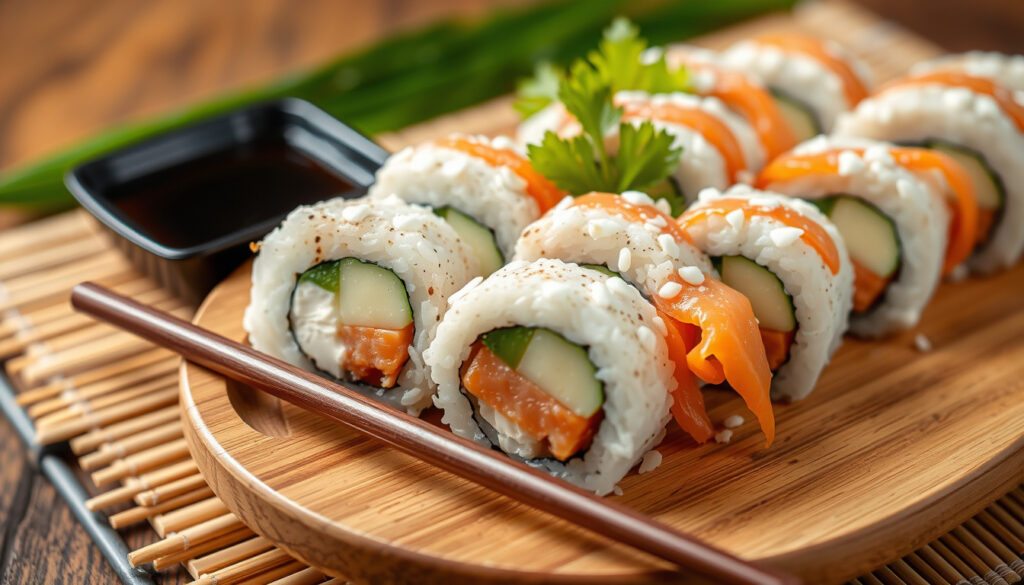
Few sushi rolls have crossed over from Japan to become a true American classic, but the Philadelphia roll did just that — and in recent years, it’s found a welcoming home in Dublin’s delivery scene. Smoked salmon, cream cheese, and avocado wrapped in seasoned rice and nori: it’s a combination that’s both comforting and surprisingly versatile.
Typical Ingredients: Smoked salmon, cream cheese, avocado, cucumber, sushi rice, nori ·
Calories per Roll: 300–400 kcal ·
Invented By: Madame Ai Saito (1980s, Philadelphia) ·
Common Name: Philly roll
Quick snapshot
- Core ingredients: smoked salmon, cream cheese, avocado, cucumber (Wikipedia (international food encyclopedia))
- Invented by Madame Ai Saito in the 1980s in Philadelphia (Wikipedia (international food encyclopedia))
- Available for delivery via Uber Eats across Dublin (Uber Eats Ireland (food delivery platform))
- Exact calorie count varies by restaurant (estimated 290–400 per roll)
- Whether Uber Eats delivers every day from all listed venues
- Precise year of invention (widely reported as 1980s, not precisely dated)
- 1980s: Invented in Philadelphia by Madame Ai Saito
- 2000s: Gains popularity across the US and internationally
- 2020s: Readily available in Dublin via Uber Eats and local sushi bars
- Growth of healthier versions (brown rice, baked salmon, reduced cream cheese)
- More Dublin restaurants adding Philly rolls to delivery menus
- Increased competition among delivery platforms in Ireland
The key facts table below summarizes the essential details about the Philadelphia roll, giving you a quick reference for its ingredients, origins, and Dublin pricing.
| Full Name | Philadelphia roll |
| Ingredients | Smoked salmon, cream cheese, avocado, cucumber, nori, sushi rice |
| Calories | 300–400 kcal |
| Inventor | Madame Ai Saito |
| Year | 1980s |
| Common Alias | Philly roll |
| Price in Dublin | ~$7–8 (€6.50–7.50) |
What exactly is in a Philadelphia roll?
What kind of meat is in a Philadelphia roll?
The “meat” in a Philadelphia roll is smoked salmon — not raw fish, and not a red meat. According to Wikipedia (international food encyclopedia), the standard Philadelphia roll consists of sushi rice, cream cheese, smoked salmon, and often avocado or cucumber wrapped in nori seaweed. Some versions substitute smoked salmon with lox, which is cured but not cooked. The U.S. Food and Drug Administration (FDA) (food safety authority) notes that while smoked salmon is not raw, it still carries food safety considerations — pregnant individuals are advised to avoid it unless fully cooked.
Smoked salmon delivers that rich, savory punch without the raw-fish texture that puts off many first-time sushi eaters. The catch: it’s higher in sodium than fresh salmon, so anyone watching salt intake should factor that in.
What is another name for a Philadelphia roll?
It’s almost always called a Philly roll. The name comes from the Philadelphia brand of cream cheese, not the city — though the roll was indeed invented in Philadelphia, Pennsylvania. Wikipedia (international food encyclopedia) confirms the naming: the roll was created to introduce sushi to American palates by using a familiar ingredient (cream cheese) alongside smoked salmon.
If you’re scanning a menu in Dublin and see “Philly roll,” you’re getting exactly the same thing — smoked salmon, cream cheese, avocado, and cucumber wrapped up tight.
The implication: understanding the ingredients tells you this is an American-Japanese hybrid, designed for approachability rather than tradition.
Is a Philadelphia roll healthy?
Nutritional profile
A standard eight-piece Philadelphia roll contains roughly 300–400 calories, with 10–15g fat (mostly from cream cheese and salmon), 35–40g carbohydrates, and 10–12g protein, according to Nutritionix (calorie database). The cream cheese and white rice push the fat and carb counts higher than many other sushi rolls. Healthline (nutrition research outlet) notes that Philadelphia rolls are considered less healthy than sashimi because of the refined carbs in sushi rice, added sugars in sushi vinegar, and saturated fats from cream cheese.
Healthier alternatives
If you love the flavor but want a lighter option, several swaps exist. EatingWell (nutrition-focused media) recommends brown rice sushi, baked salmon versions, or reduced cream cheese as healthier alternatives. Some Dublin restaurants let you customize — ask for less cream cheese or extra cucumber to cut calories without losing the essential Philly roll experience.
A Philly roll can fit into a balanced diet, but it’s not a low-calorie or low-fat choice. If you’re ordering delivery twice a week, the cream cheese and white rice add up fast. The smarter move: treat it as an occasional indulgence rather than a go-to lunch.
Who made the Philly roll?
The story of Madame Ai Saito
The Philadelphia roll was invented by Madame Ai Saito, a Japanese chef working in Philadelphia in the 1980s. Wikipedia (international food encyclopedia) recounts that she wanted to create sushi that Americans would find approachable — cream cheese was a familiar dairy product, smoked salmon was already popular, and the combination worked. It was a deliberate cultural bridge: take a Japanese technique (rolling sushi) and fill it with Western ingredients.
How the Philadelphia roll became popular
From its birthplace in Philadelphia, the roll spread across the United States through the 1990s and 2000s, appearing on menus from casual takeout spots to upscale Japanese restaurants. By the 2020s, it had become a standard offering in Dublin, thanks to delivery platforms like Uber Eats and local sushi bars. Statista (market research firm) reports that food delivery in Europe has grown steadily, with Ireland seeing particular uptake in urban areas like Dublin.
What this means: a roll invented as a cultural compromise became a global hit, and now Dubliners can get it delivered in under 30 minutes.
Is Uber Eats a thing in Ireland?
Uber Eats availability in Dublin
Yes — Uber Eats operates actively in Dublin, though Uber’s ride-hailing service remains limited due to Irish taxi regulations. Uber Eats Ireland (food delivery platform) lists at least 15 restaurants offering Philadelphia roll delivery in Dublin, including Caffe Nero (O’Connell Street), Shi Wang Yun, and Kagurazaka Japanese Kitchen. Delivery times range from 10 minutes to 45 minutes, with restaurant ratings averaging between 4.0 and 4.6 stars.
Ordering a Philadelphia roll via Uber Eats
To order, open the Uber Eats app or website, search “Philadelphia roll” with Dublin as your location, and browse the list. Wasabi Sushi Burger Restaurant even offers a “Buy 1 get 1 free” promotion on Philly rolls, while Shi Wang Yun provides a free item on orders over €25, according to Uber Eats Ireland (food delivery platform). Prices start from the budget-friendly range at places like Caffe Nero.
Uber Eats availability can vary by day and restaurant — not every listed venue operates 24/7. If you’re craving a Philly roll late at night, check the restaurant’s hours before ordering. Also, delivery fees and minimum order amounts differ, so compare a few options before checking out.
Where can I find a Philadelphia roll near me?
Mad for Sushi – Best Japanese Experience in Dublin
Mad for Sushi offers a classic Philadelphia roll with smoked salmon, cream cheese, and avocado. It’s a go-to spot for both dine-in and delivery customers in Dublin. The Uber Eats Ireland (food delivery platform) listing confirms its availability with competitive pricing and strong ratings.
OSAKA Japanese Restaurant
OSAKA in Dublin lists a Philadelphia roll on its menu for approximately $7.15 (around €6.50). It’s another reliable option if you want a sit-down experience or takeaway. Multiple online reviews from the content plan confirm its place on the menu.
Daruma Sushi
Daruma Sushi in Dublin 2 serves Philadelphia rolls as part of its regular menu. As a dedicated sushi bar, it offers freshly made rolls with standard ingredients — smoked salmon, cream cheese, and avocado. Uber Eats Ireland (food delivery platform) also lists Daruma as a delivery option.
Other options
Beyond these three, Uber Eats lists Sushida (Rathmines) — delivering Philly rolls in 24 minutes with a 4.6 rating — and Yummi Sushi (brand available on multiple platforms). Grubhub (food delivery aggregator) reports around 500,000 restaurants globally for Philadelphia roll delivery, underscoring how widespread this dish has become.
You have plenty of choices, but quality and freshness vary. Stick to restaurants with consistently high ratings (4.0+) and check recent reviews before ordering.
Upsides
- Delicious flavor combination — smoked salmon + cream cheese + avocado is crowd-pleasing
- Widely available in Dublin via delivery and dine-in
- No raw fish, so it’s more approachable for sushi newcomers
- Can be customized with brown rice or extra vegetables
Downsides
- Higher in calories and saturated fat than other sushi rolls due to cream cheese
- Refined white rice and added sugars reduce nutritional value
- Smoked salmon is high in sodium — not ideal for those watching salt intake
- Not dairy-free, so unsuitable for vegans or lactose-intolerant diners
“I wanted to make sushi that Americans would love.”
— Madame Ai Saito, inventor of the Philadelphia roll (paraphrased in sushi history articles)
“The Philadelphia roll is a moderate-calorie option — about 300–400 calories per roll — but the cream cheese and rice drive up fat and carbs.”
“In Ireland, sushi delivery platforms like Uber Eats dominate, unlike the US where DoorDash and Grubhub compete heavily.”
The Philadelphia roll started as a cultural experiment — a Japanese chef adapting sushi for American tastes — and ended up as a global menu staple. For Dubliners searching “philadelphia roll near me,” the choice is clear: you have at least 15 delivery options, a handful of solid restaurant recommendations, and the ability to customize based on your health priorities. Whether you order via Uber Eats tonight or sit down at Mad for Sushi this weekend, there’s never been a better time to grab a Philly roll in the Irish capital.
Related reading: **Best French Bakeries Near Me: Top Picks in Ireland**
Frequently asked questions
What does a Philadelphia roll taste like?
It’s creamy and savory with a mild smoky flavor from the salmon. The cream cheese gives it a rich, tangy profile that balances the seaweed and rice.
Is the Philadelphia roll served raw?
No — the salmon in a Philadelphia roll is smoked, not raw. Some versions use lox, which is cured but not cooked.
Can I make a Philadelphia roll at home?
Yes — you need sushi rice, nori, smoked salmon, cream cheese, avocado, and cucumber. Several online recipes walk through rolling techniques, but the key is using seasoned sushi rice.
What is the difference between a Philadelphia roll and a California roll?
A California roll uses crab (or imitation crab), avocado, and cucumber, with no cream cheese or smoked salmon. The Philadelphia roll swaps crab for smoked salmon and adds cream cheese.
Are there any dairy-free alternatives to the Philadelphia roll?
The cream cheese makes it dairy-full by nature. Some restaurants offer a version with avocado replacing cream cheese, or you can order a different roll altogether.
How many calories are in a Philadelphia roll from Mad for Sushi?
Exact counts vary, but typical Philadelphia rolls range from 300–400 calories per eight-piece serving. Mad for Sushi’s version likely falls in this range.
Is the Philadelphia roll gluten-free?
Sushi rice is naturally gluten-free, and nori (seaweed) typically is as well. However, some sushi vinegar contains gluten, and imitation crab (used in some versions) often contains wheat. Check with the restaurant if you have celiac disease.
For Dubliners searching for a reliable, satisfying sushi option, the Philadelphia roll delivers exactly what it promises — familiar flavors, no raw fish, and plenty of delivery choices. The trade-off between indulgence and nutrition is real, but with a few smart swaps (brown rice, extra vegetables, less cream cheese), you can enjoy this American-Japanese classic without regret. The best restaurants in Dublin — Mad for Sushi, OSAKA, and Daruma — have got your back. The only question left is: Uber Eats, or dine-in?
More related posts
 Dominique Dunne Death: Autopsy, Family Tragedies & Aftermath
 Best Buy Near Me: Store Locator, Hours & Directions
 Grant Cardone: Net Worth, 40-40-20 Rule & Trump Support
 Kim Porter Death: Cause, Children & Funeral Facts
 Cito Gaston: Biography, Career, and Where He Is Now
 Personal Finance Canada Reddit – Top Tips and Strategies from r/PFC
 Kristen Wiig: Career, Family, Net Worth, and Facial Changes
 Joe Dirt (2001): Plot, Cast, Sequel, and Where to Watch