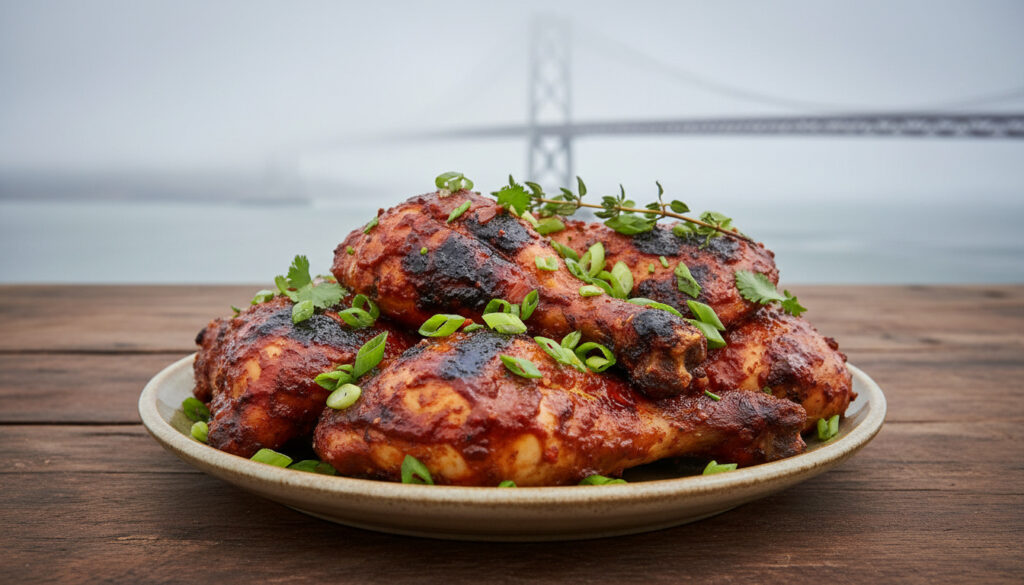
Jerk Chicken Near Me – Authentic Bay Area Guide
The search for exceptional jerk chicken begins with smoke. That distinctive scent of pimento wood drifting through neighborhood streets signals a kitchen honoring centuries of Maroon tradition. Whether scouting for lunch takeout or planning a dinner delivery, locating authentic jerk chicken near you requires recognizing specific markers of legitimacy in a landscape crowded with imitations.
Contemporary demand for Caribbean cuisine has transformed jerk chicken from a niche ethnic specialty into a widely available protein option. Yet proximity alone does not guarantee quality. The gap between genuine preparation and fast-casual approximation remains significant, particularly for diners seeking the complex layering of scotch bonnet heat and allspice fragrance that defines the dish.
Where Can I Find Jerk Chicken Near Me?
| Origin | Key Spice | Authentic Cook | Typical Sides |
|---|---|---|---|
| Jamaica | Scotch Bonnet | Pimento Wood Grill | Festival, Rice & Peas |
- Look for pimento wood smoke signals rather than gas grill marks
- Verify 24-hour minimum marination through menu descriptions
- Prioritize establishments using whole chicken cuts over pre-processed strips
- Check recent ratings above 4.2 stars for consistent spice balance
- Confirm late-night availability varies by delivery zone
- Understand that vegan alternatives require direct menu verification
- Note that Bay Area concentrations currently span Menlo Park to Oakland
| Fact | Details |
|---|---|
| Heat Level | Medium-Hot (adjustable via pepper seeding) |
| Marinate Duration | 24+ hours for authentic penetration |
| Caloric Density | 250-350 kcal per 4oz serving |
| Cultural Roots | Maroon hunters, 17th century Jamaica |
| Core Pepper | Scotch bonnet (100,000+ Scoville units) |
| Essential Wood | Green pimento/allspice |
| Primary Cuts | Thighs, legs, quarters, wings |
| Preservation Origin | 1655-early 1700s survival technique |
Jerk Chicken Delivery and Takeout Options Near Me
Bay Area Standouts
Current listings for the San Francisco Bay Area illustrate the density of quality options available in major metropolitan regions. TripAdvisor data identifies several operational venues with distinct service models.
| Restaurant | Location | Rating | Features |
|---|---|---|---|
| Back A Yard Caribbean American Grill | Menlo Park (43 mi) | 4.5/5 (76 reviews) | Delivery available, rice & peas combos, plantains |
| Kingston 11 Cuisine | Oakland (19 mi) | 4.2/5 (43 reviews) | Online ordering, boneless options |
| Flavas Jamaican Grill | South San Francisco (30 mi) | 4.3/5 (27 reviews) | Authentic grill, menu online, takeout |
| Coconuts Caribbean Restaurant & Bar | Palo Alto (45 mi) | 3.9/5 (98 reviews) | Takeout, festival bread sides |
| Jam N’ Jerk Kitchen | Pleasant Hill | N/A | Takeout/preorder only, call 510-978-1121 |
| Dubplate Kitchen | Sacramento (~90 mi) | Excellent | Dine-in/delivery, open until 8:30 PM |
Delivery Integration
Most established jerk specialists now interface with DoorDash and Uber Eats, though pre-ordering directly often secures better spice customization. Late-night availability concentrates around Back A Yard and similar venues with extended kitchen hours.
Restaurant status changes frequently. Confirm “open now” conditions through delivery apps or direct calls, particularly for locations like Jam N’ Jerk Kitchen which operates via preorder only.
What Is Jerk Chicken and How Spicy Is It?
Defining Characteristics
Jerk chicken represents a specific cooking methodology originating in Jamaica. The technique involves dry-rubbing or wet-marinating meat in a spice blend dominated by scotch bonnet peppers and allspice berries, then slow-cooking over pimento wood. Historical documentation traces the term to Spanish “charqui” via the Arawak peoples, though modern associations center on the Maroon adaptation of Taino smoking methods.
Scoville and Sensibility
The heat profile derives primarily from the scotch bonnet, a habanero variant registering over 100,000 Scoville units. However, authenticity does not mandate maximum burn. Traditional recipes allow for pepper seeding to reduce capsaicin concentration while preserving the floral, fruity notes essential to the varietal.
Origins and Authentic Jerk Chicken
Maroon Heritage
The technique emerged from necessity. During the 1655 British colonization of Jamaica, escaped African slaves known as Maroons fled to the Blue Mountains. Blending African preservation knowledge with Taino pimento wood smoking and Arawak spice gathering, they developed jerk as a survival mechanism to mask cooking smoke from colonial forces and extend meat viability without refrigeration. Culinary historians note the 1739 treaty with British forces granted Maroon communities like Moore Town autonomy, preserving these cooking traditions through subsequent centuries.
Authenticity Markers
Genuine jerk requires whole chicken parts—thighs, legs, quarters, wings—never processed strips. The marinade demands fresh scotch bonnets, ground pimento berries, thyme, and green onions, blended into paste and applied for 12 to 48 hours. Critical distinction lies in the fuel: cooking must occur over green pimento wood, not gas or charcoal alone. Authenticity guides explicitly warn against pre-made powder rubs, identifying these as shortcuts that sacrifice the volatile oils critical to proper flavor development.
Jamaican jerk cooking now holds designation as an intangible cultural heritage element, acknowledging its role in celebrations of emancipation and resistance, particularly during annual Maroon festivals at Accompong.
Pre-bottled jerk sauces and pre-mixed commercial powders typically lack fresh scotch bonnet heat and pimento wood smoke. These products represent flavor approximations rather than authentic preparations.
How Did Jerk Chicken Develop Over Centuries?
- Pre-17th century: Indigenous Taino and Arawak peoples establish seasoning foundations using pimento berries and early pepper varieties native to the island.
- 1655-early 1700s: British colonization triggers Maroon migration into Jamaica’s Blue Mountains, where the fusion of African, Taino, and Arawak techniques produces the survival-oriented jerk method—source: Dubplate Kitchen.
- 1739: The treaty of Cudjoe grants Maroon autonomy, legalizing their settlements and protecting culinary practices from colonial suppression.
- 18th-19th centuries: Moore Town and other Maroon communities formalize recipe preservation, integrating jerk into festival traditions tied to emancipation.
- Post-WWII: Commercialization begins at Boston Beach in Portland, Jamaica, establishing the model for modern jerk centers.
- 20th-21st centuries: Diaspora migration spreads the technique globally, eventually earning UNESCO heritage status for the tradition.
What Is Definitively Known About Jerk Chicken?
| Established Facts | Remaining Uncertainties |
|---|---|
| Maroon origins in 17th-century Jamaica | Specific pre-1655 Taino recipe compositions remain fragmentary |
| Pimento wood essential for authentic smoke signature | Regional variations between eastern and western Jamaican styles lack comprehensive documentation |
| 24-hour marinade minimum for proper protein penetration | Exact caloric variations in restaurant preparations versus home cooking |
| Scotch bonnet pepper heat ranges 100,000-350,000 Scoville units | Standardized vegan protein absorption rates for traditional marinades |
Why Does Jerk Chicken Hold Cultural Significance?
Beyond sustenance, jerk chicken embodies resistance and adaptation. The Maroon development of the technique during the 1655-1739 period represented a culinary act of autonomy, preserving African foodways while incorporating indigenous Caribbean ingredients. London Drugs Near Me Modern celebrations at Accompong and other Maroon settlements continue to feature jerk as a centerpiece of emancipation remembrance.
The dish functions as edible history, connecting contemporary diners to 17th-century survival strategies and the broader context of Caribbean colonial resistance. Annual festivals reinforce these connections, transforming meal consumption into cultural participation.
What Do Culinary Experts Say About Authenticity?
Jerk is more than spice—it’s survival food.
— Traditional Jamaican culinary authority, via Dubplate Kitchen research
Authentic jerk uses allspice berries whole, ground fresh for each batch.
— Food historian, Food Network documentation
How Can You Start Finding Authentic Jerk Chicken?
Locating quality jerk chicken near you requires distinguishing between smoke and sauce. Prioritize establishments utilizing pimento wood grills and fresh scotch bonnet marinades, verify operational hours through direct contact, and understand that authentic preparation reflects centuries of Maroon cultural heritage. For travelers seeking culinary experiences beyond Caribbean cuisine, consider accommodations like Hotel Riu Palace Costa Mujeres while exploring regional foodways.
How can I reduce the heat without sacrificing authenticity?
Remove seeds and white membranes from scotch bonnets before blending. The fruity flavor persists while capsaicin concentration drops significantly.
What is festival bread?
A traditional Jamaican side of sweet, cornmeal-based fried dough, often served alongside jerk chicken to balance spice intensity.
Can jerk chicken be prepared without outdoor grilling?
While indoor oven baking produces edible results, it lacks the essential pimento wood smoke signature that defines authentic jerk.
Is traditional jerk chicken gluten-free?
Most authentic marinades contain soy sauce, which includes wheat. Request tamari or gluten-free soy alternatives when ordering.
How does jerk differ from American barbecue?
Jerk relies on scotch bonnet heat and allspice rather than tomato or vinegar bases, and traditionally uses pimento wood rather than hickory or mesquite.
More related posts
 Stefano Faita: Biography, Career, Recipes & Current Life
 Goldie Boutilier: Biography, Music, Career, and Personal Life
 Tom Sandoval: Scandoval, Apology, Lawsuit & Net Worth
 TD Mortgage Payment Calculator: Estimate Canada Payments
 Donna Summer’s Death: Lung Cancer, Smoking Rumors & Final Days
 Recette avec Porc Haché: Easy Ground Pork Recipes & Cooking Tips
 47 Inches in CM: 119.38 cm Exact Conversion + Guide
 The Art of Racing in the Rain – Summary, Ending, True Story