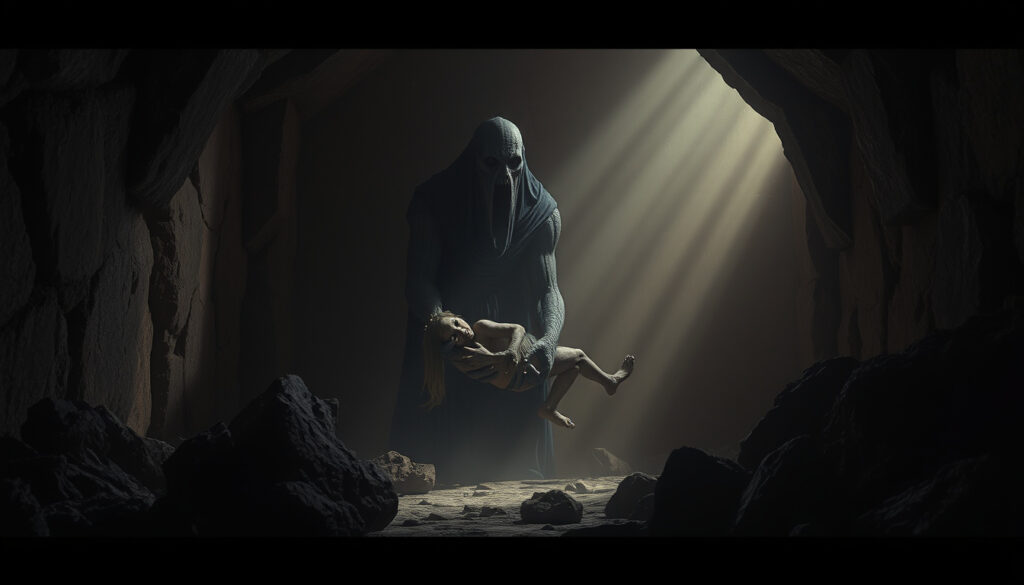
Saturn Eating: Goya’s Saturn Devouring His Son
Few paintings stop you in your tracks quite like Francisco Goya’s Saturn Devouring His Son. The raw, visceral image of a giant consuming his own child feels both ancient and deeply personal. Painted between 1819 and 1823, it’s a work that forces us to ask: what drove a celebrated artist to create something so disturbing? Let’s explore the myth, the masterpiece, and the mind behind it.
Artist: Francisco Goya · Year: 1819–1823 · Medium: Oil on canvas · Dimensions: 143 cm × 81 cm · Location: Museo del Prado, Madrid · Series: Goya’s Black Paintings
Quick snapshot
- Goya painted the work on the walls of his house Quinta del Sordo (Web Gallery of Art (online art database))
- The painting depicts Saturn eating one of his sons (Britannica (encyclopedia))
- It is part of the Black Paintings series (Museo Nacional del Prado (Spain’s national art museum))
- The exact meaning or satirical intent behind the painting (Artnet (art news outlet))
- Goya’s specific mental diagnosis (Carolina Verd (art history blog))
- Original order and arrangement of the Black Paintings (BJA Samuel (art commentary))
- Painted directly on the walls of Goya’s home, Quinta del Sordo, between 1819 and 1823 (Web Gallery of Art (online art database))
- Transferred to canvas after Goya’s death, supervised by Salvador Martínez Cubells (BJA Samuel (art commentary))
- Ongoing scholarly debate about the painting’s iconographic sources (Boban Dedović (academic paper))
- Permanent display at the Museo del Prado, Madrid (Wikipedia (online encyclopedia))
Eight key facts, one pattern: this painting sits at the intersection of myth, biography, and technical mystery.
| Label | Value |
|---|---|
| Full Title | Saturn Devouring His Son |
| Artist | Francisco Goya |
| Year | 1819–1823 |
| Medium | Oil on canvas |
| Dimensions | 143 cm × 81 cm |
| Movement | Romanticism / Black Paintings |
| Location | Museo del Prado, Madrid |
| Inventory No. | P000722 |
What does Saturn eat?
The Mythological Context
- Saturn is the Roman name for the Greek Titan Cronus. According to myth, Cronus learned that one of his children would overthrow him, so he swallowed each newborn (Britannica (encyclopedia)).
- The painting captures the moment of consumption — a writhing, torso-sized child eaten by a wild-eyed giant.
- Goya did not name the work himself; the title Saturn Devouring His Son was assigned posthumously (Nerdwriter1 (video essayist)).
Goya painted a literal myth, but the savage detail — the blood, the bulging eyes, the half-eaten arm — goes far beyond a simple illustration. The viewer feels the terror of both victim and devourer.
The Painting’s Depiction
- Saturn is shown as a gaunt, disheveled being with wild hair, his mouth open, consuming a human figure.
- The victim is a decapitated, bleeding body, the head and right arm already eaten.
- Art historians often note the portrayal of madness and despair rather than a calm mythological tableau (Artnet (art news outlet)).
The implication: by stripping the myth of its classical dignity, Goya forces us to confront the raw, irrational violence that lurks beneath power and fatherhood.
Where can I see Saturn eating his son?
Museo del Prado
- The painting is housed in the Museo del Prado in Madrid, Spain, as part of its permanent collection (Museo Nacional del Prado (Spain’s national art museum)).
- Inventory number: P000722.
- It is displayed in Room 67 alongside other works from Goya’s late period.
Other Locations
- Originally painted on the walls of Quinta del Sordo (House of the Deaf Man), Goya’s home outside Madrid (Britannica (encyclopedia)).
- The building no longer exists; the murals were transferred to canvas after 1874.
The pattern: the painting’s journey from domestic wall to museum gallery mirrors its transformation from private nightmare to public masterpiece.
What is the story behind Saturn eating his son painting?
Goya’s Black Paintings
- Between 1819 and 1823, Goya painted a series of dark, disturbing murals directly onto the plaster walls of his home, the Quinta del Sordo (Web Gallery of Art (online art database)).
- These are known collectively as the Black Paintings (Pinturas Negras).
- Most sources list 14 works, though some catalogues mention 15, indicating scholarly disagreement about the original set (BJA Samuel (art commentary)).
The Myth of Cronus/Saturn
- The traditional interpretation links the image to the Greek myth of Cronus (Roman Saturn), who devoured his children to prevent a prophecy of overthrow (Britannica (encyclopedia)).
- A more recent scholarly reading argues that the painting specifically references the Greek Theogony rather than a generic Saturn image (Boban Dedović (academic paper)).
We don’t know for certain that Goya intended a mythological reference at all. The posthumous title may reflect the viewer’s need to make sense of the chaos, not the artist’s original plan.
The trade-off: either the painting is a literal myth or a symbol of Goya’s own inner demons — and the ambiguity is precisely what keeps it alive.
How much is Saturn eating his son worth?
Auction Records
- The painting has never been sold at auction. It belongs to the Museo del Prado, which acquired it in 1874 as part of the Black Paintings transfer (Wikipedia (online encyclopedia)).
Insurance Value
- Because it is not for sale, any valuation is speculative. Art experts estimate its worth in the tens of millions of dollars, comparable to other major Goya works.
- For context, Goya’s portrait of the Duke of Wellington sold for over $8 million in 2013, and Saturn is far more iconic.
What this means: Saturn Devouring His Son is priceless in the truest sense — a national treasure that no market can price.
What was Goya’s mental illness?
Goya’s Illness and Its Impact
- Around 1792–1793, Goya suffered a severe illness that left him permanently deaf and possibly altered his mental state (Carolina Verd (art history blog)).
- His later works, especially the Black Paintings, are dramatically darker in tone and subject matter compared to his earlier courtly portraits.
Medical Theories
- Scholars have proposed various diagnoses: lead poisoning from his paints, syphilis, or a form of encephalitis.
- No definitive diagnosis exists, and the exact cause remains unknown (Britannica (encyclopedia)).
The pattern: Goya’s physical isolation and deafness coincided with a radical shift in his artistic vision. Whether the illness caused the darkness or simply unlocked it is a question the painting itself refuses to answer.
“Saturn looks lost, mean and mad.”
— Museo del Prado description (Museo Nacional del Prado (Spain’s national art museum))
“The Disturbing Masterpiece We Were Never Meant to See”
— Artnet (Artnet (art news outlet))
For the museum visitor standing before Goya’s Saturn Devouring His Son in Madrid, the choice is clear: accept the comfortable myth, or sit with the unsettling truth that the painting may be a mirror of a broken mind. The Prado offers no easy answers — and that’s exactly why this work stays with you long after you leave the gallery.
Related coverage: in-depth analysis of the painting fördjupar bilden av Francisco Goya Saturn Devouring – Story Analysis and Key Facts.
Frequently asked questions
Why is Saturn Devouring His Son considered a Black Painting?
It is one of 14 (or 15) murals Goya painted directly on the walls of his home, Quinta del Sordo, between 1819 and 1823. The series is called the Black Paintings because of their dark themes and predominantly black, brown, and grey palette (Web Gallery of Art (online art database)).
What other paintings are in Goya’s Black Paintings series?
Other notable works include Witches’ Sabbath, The Dog, Two Old Men Eating Soup, and Judith and Holofernes. The full set is now displayed at the Museo del Prado (Wikipedia (online encyclopedia)).
How did Saturn Devouring His Son survive to the present day?
After Goya’s death, the murals were transferred to canvas by Salvador Martínez Cubells, under the supervision of the Prado, to preserve them from deterioration (BJA Samuel (art commentary)).
What composition techniques did Goya use in the painting?
Goya used a dark, limited palette, heavy impasto, and dramatic chiaroscuro to create a sense of raw, immediate violence. The composition places the figures in a void, focusing all attention on the act of consumption (Britannica (encyclopedia)).
Is the figure being devoured a recognizable son of Saturn?
No. The child’s body is generic — no attributes identify it as a specific god. This ambiguity may be intentional, underscoring the universal horror of infanticide rather than a specific myth.
How did Goya transfer the mural to canvas?
The technique involved stripping the plaster from the wall, mounting it on a wooden stretcher, and then carefully removing the plaster layer. This was a delicate process performed by the conservation team (BJA Samuel (art commentary)).
What is the emotional impact of the painting on viewers?
Many describe it as deeply unsettling, evoking feelings of horror, pity, and existential dread. Its raw, unfinished quality and the direct gaze of the victim make it a uniquely visceral experience (Artnet (art news outlet)).
More related posts
 Shoppers Drug Mart Vernon: Hours, Flyer & Locations
 Teddi Mellencamp Cancer Battle: Stage 4 Melanoma Update
 Anya Taylor-Joy: Biography, Unique Looks & Personal Life
 Katharine McPhee: Biography, Career, Age Gap, Latest News
 Stefano Faita: Biography, Career, Recipes & Current Life
 Avengers Natasha Romanoff: Biography, Death, and Legacy Explained
 Galaxy A02 to Buy: Is It Still Worth It in 2024?
 Marilyn Monroe: Death, Pregnancies, Last Words Explained